
The birth of your baby is a beautiful milestone, but your journey does not end with delivery. The weeks after childbirth are an important period of postpartum recovery, when your body and mind gradually adjust to life after pregnancy and birth.
Whether you have had a normal vaginal delivery or a C-section, your recovery deserves time, nutrition, rest and appropriate medical support. Postnatal care also helps identify concerns early and supports breastfeeding, emotional wellbeing and your overall recovery.
At Mathruveda, Kalyan Nagar, Bangalore, we believe that postnatal care should focus on the mother as well as the newborn. Here is a simple week-by-week guide to help new mothers understand what to expect during the early weeks after delivery.
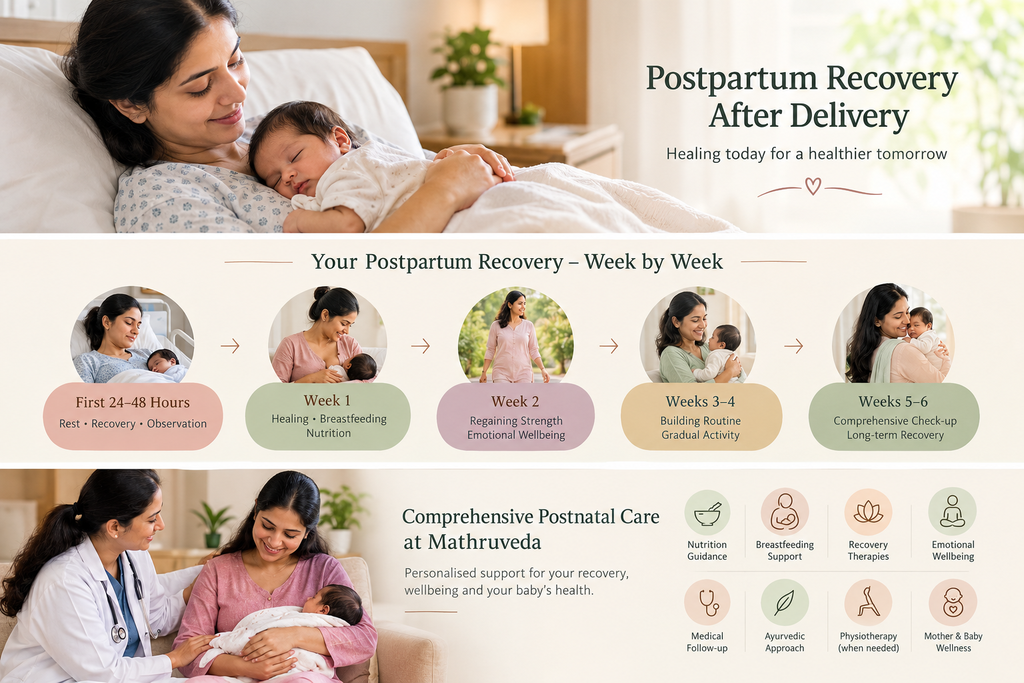
The First 24–48 Hours: Rest, Recovery and Observation
The first couple of days after delivery are an important time for monitoring your health. Healthcare professionals may assess your bleeding, blood pressure, temperature, pain, uterine recovery and overall wellbeing. Your baby’s feeding and breastfeeding may also need support.
You may experience:
- Vaginal bleeding or lochia
- Uterine cramps
- Perineal soreness after vaginal delivery
- Incision discomfort after a C-section
- Breast tenderness or fullness
- Fatigue and weakness
- Emotional changes
Try to rest whenever possible, stay hydrated and eat nutritious meals. Do not hesitate to ask your family or healthcare team for help with the baby and household activities.
WHO recommends postnatal care beginning within 24 hours after birth, followed by additional contacts during the first six weeks.
Week 1: Focus on Healing and Breastfeeding
The first week can feel overwhelming as you adjust to feeding, sleeping and caring for your newborn.
Your priorities should include postpartum recovery, adequate nutrition, hydration, breastfeeding support and rest.
A balanced postpartum diet can include:
- Protein-rich foods such as dal, eggs, paneer and legumes
- Whole grains and traditional nutritious foods
- Seasonal fruits and vegetables
- Adequate fluids
- Iron- and calcium-rich foods as advised by your healthcare professional
If you had a C-section, keep the incision clean and follow your doctor’s wound-care instructions. If you had stitches after a vaginal delivery, follow the recommended hygiene and care instructions.
Avoid lifting heavy objects or pushing yourself to resume normal activities too quickly.
Week 2: Gradually Regaining Strength
By the second week, many mothers begin to feel slightly more comfortable, although tiredness can still be significant.
Continue focusing on postnatal nutrition and recovery rather than trying to return immediately to your pre-pregnancy routine.
Depending on your delivery and medical condition, your healthcare provider may advise gentle movement. Short, comfortable walks can gradually become part of your routine when medically appropriate.
This is also a good time to pay attention to your emotional wellbeing. Feeling emotional or overwhelmed can happen during the early postpartum period. However, persistent sadness, severe anxiety, loss of interest in usual activities or difficulty coping should not be ignored. WHO recommends attention to maternal mental health and screening for postpartum depression and anxiety during postnatal care.
Weeks 3–4: Building a New Routine
Around the third and fourth weeks, you may begin developing a routine around your baby’s feeding and sleeping patterns. Your physical recovery will continue, but healing does not happen at exactly the same speed for every mother.
Continue to:
- Eat nourishing meals
- Stay hydrated
- Get adequate rest whenever possible
- Follow your doctor’s recommendations
- Continue breastfeeding support if needed
- Gradually increase physical activity according to your recovery
- Take care of your emotional wellbeing
Postnatal massage, physiotherapy and other supportive therapies may be considered when appropriate, depending on your delivery, health condition and healthcare provider’s advice.
At Mathruveda, postnatal care can be tailored to the mother’s individual recovery needs, with attention to nutrition, physical recovery, relaxation, breastfeeding support and traditional Ayurvedic approaches where appropriate.
Weeks 5–6: Rebuilding Confidence and Strength
By six weeks, many mothers are ready for a more comprehensive postpartum assessment. However, recovery can take longer, particularly after a C-section, complicated delivery, significant blood loss or other health concerns.
Your postnatal consultation may include discussion of:
- Physical healing
- Breastfeeding
- Nutrition
- Pelvic and abdominal recovery
- Emotional wellbeing
- Family planning and contraception
- Physical activity
- Ongoing pain or discomfort
WHO guidance includes a comprehensive maternal assessment around six weeks after birth, including physical recovery, mental health and family-planning needs.
Remember: six weeks is not a deadline for complete recovery. Every mother’s postpartum journey is different.
When Should You Seek Medical Help?
Some postpartum symptoms require prompt medical attention. Seek medical care if you experience very heavy bleeding, high fever, severe or persistent headache, chest pain, difficulty breathing, significant abdominal pain, a painful/swollen leg, worsening wound problems or other concerning symptoms.
Do not wait for a routine postnatal appointment if you feel that something is seriously wrong.
Postpartum Recovery Is About the Mother Too
New mothers often focus entirely on their newborn and forget their own needs. But taking care of yourself is an important part of taking care of your baby.
Postpartum recovery involves much more than healing from delivery. It includes rebuilding physical strength, establishing breastfeeding, nourishing your body, managing emotional changes and gradually becoming comfortable with your new role as a mother.
At Mathruveda, Kalyan Nagar, Bangalore, our approach to postnatal care and postpartum recovery is designed to support mothers through the transition from pregnancy to motherhood. With personalised care, postnatal support, nutrition guidance, recovery therapies and professional guidance, mothers can receive support based on their individual needs.
Takeaway
There is no single timeline for postpartum recovery. Give your body time to heal, ask for help when you need it and attend recommended postnatal check-ups. With the right support, recovery can become a more comfortable and confident journey.
Mathruveda – Your integrated care partner from conception to pregnancy, delivery and post-delivery healing.
Medical note: This article is for general education and does not replace individual medical advice. Postpartum recovery varies based on the type of delivery and each mother’s health needs.
WHO emphasises that quality postnatal care should support both the mother’s physical and mental wellbeing during the first six weeks after birth and beyond when additional care is needed.